The cast.
Cat Brennan, 46, is the one who made the promise. Eighteen years of emergency medicine at St. Clare’s; she deleted the word stopping from her vocabulary at twenty-eight. She reads a body the way other people read a face, vitals first, the involuntary triage, and the one body she cannot read is the one asleep down the hall.
Gloria is the one the promise was made to, Ray’s mother, dying of dementia anyway; Cat makes her breakfast before dawn and drives to the next shift. Ray is the husband Cat lost, who played “Blackbird” at their wedding. Miles, 16, is the son, the one with the scar he will carry the rest of his life; he plays guitar and sleeps with the door open. Dr. Kim is the colleague who sees it first and says the things no one else will say. Claire Mercer, the pediatrician married to neurosurgeon Neil Mercer, meets Cat in the hospital lobby and names the gap they are both standing in: the patient still calls it the patient; the patient is your son.
The Seer is the man on the bench outside the ambulance bay, fifties, jacket collar up, hands resting on his knees with a stillness that is itself a vital sign Cat cannot interpret, hands too still, placed the way a body on a table is still.
The Seer scene.
A Thursday in November, 11 p.m., Cat on the bench outside the bay holding one of the nurses’ cigarettes she will not smoke. The man is already sitting there. The ER sounds through the sliding doors hold a half-beat, the monitor’s beep sustains a note, the overhead page pauses between the code number and the location. He speaks without looking at her, naming no date, no drug, no name, only the shape:
“You’ll keep the promise. You’ll keep it the way you’ve been keeping it. Every morning to her house. Every shift to the bay. … You’ll cover the gaps. The shifts will come down. The sleep will come down with them. The body will ration the way you ration during a surge, shutting down what’s not critical to protect what is. The system it shuts down first will be the system you call home.
“You’ll miss the signs. The ones you would see if you weren’t this tired. … A woman whose job is to notice will call you, and you will reschedule her and reschedule her and meet her on the third call. She will tell you again, the same sentence with one word changed, and the changed word will be the word that names the thing. He will try. You will not be there to stop him. You will be where the promise sent you.
“He will survive because you come home earlier than the schedule said you would. Not because you knew. Because a number on a chart that was not your son’s failed to clear. … That is the margin. Not your training. Not your eighteen years. A blood test that did not clear. The kind of luck that isn’t a save. And you will know the difference every day for the rest of your life.”
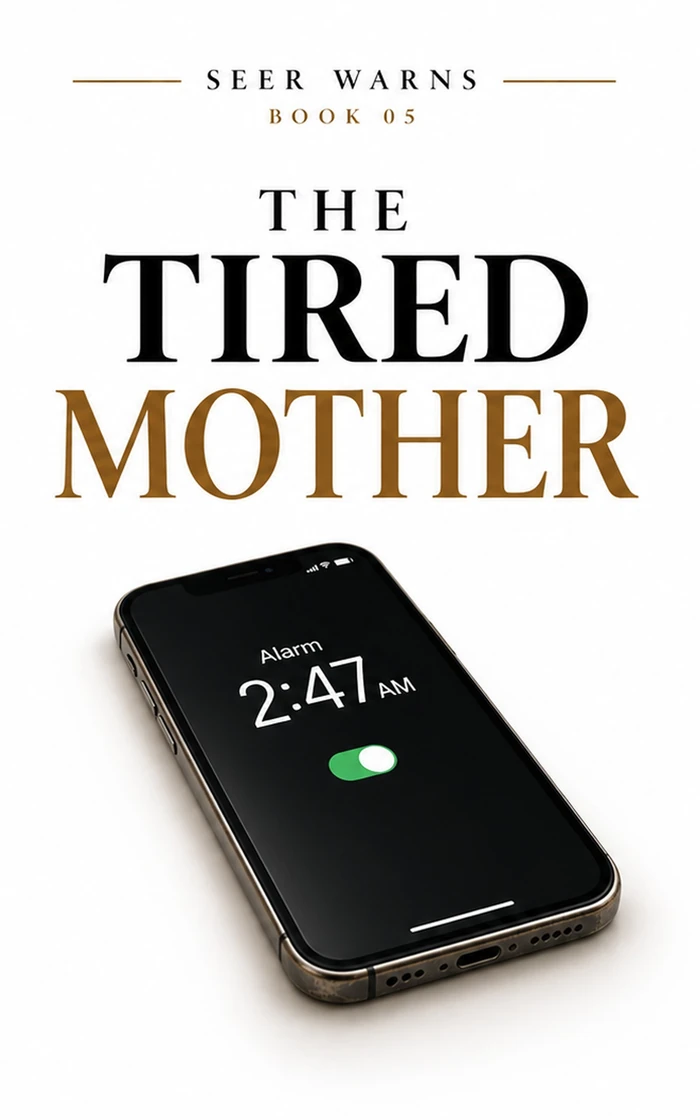
He tells her the shape of how it will happen, that what the boy reaches for will be hers, taken from where she keeps it, then an instrument from a room she has walked through ten thousand times. Then the one impossible specific: “You set your alarm for two forty-seven, Cat. Every night since the sixth night after Ray died. … No one in the world knows that is why the alarm is the alarm. It is in the phone. It is in the dark. It is not anywhere else.” He lifts his right hand for the first time and sets a sealed pack of Marlboro Reds on the bench, the tax stamp current, the cellophane unbroken, a brand Cat has not smoked since 2004. When she looks up, the bench is empty, no footsteps, no sliding-door hiss. She puts the pack in her scrubs pocket and works seven more hours.
The warned choice.
Loss A: keep the promise. Drive to Gloria’s every dawn, cover the gaps when the aides quit, ration sleep down to three hours, give the attention to the rooms where the patient is not, and miss the slow emergency in her own house until the kitchen table, the pills, the dish towel, the paring knife, the fifteen minutes.
Loss B: break the promise to the dead to keep the one owed to the living. Put Gloria in the place she said she would rather die than enter, free the hours, sit on the edge of Miles’s bed instead of counting his breaths from the threshold, stop being the woman who never stops.
Cat keeps the promise. She files the man in the shadow chart, the parallel chart she has kept for eighteen years of the impossibles she can neither explain nor dismiss, and she does not act on it, because acting would mean saying out loud that she heard the shape of it and did nothing. She works the shifts, stands in the doorways, reads the vitals, and tries to find the gap, and the gap never opens, because closing it would be a thing she has to do, and the promise is the thing that happens to her.
The fracture tell.
The doorway, and the word fine. Cat checks her son the way she checks a board, from the threshold, counting respirations, filing “stable,” never crossing into the room. The book reads her exhaustion in the widening distance between the doorway and the bed, and in the word both she and Claire Mercer keep using for the men they love, fine, the word Cat has filed for eighteen years under the patient whose word doesn’t match the monitor, now spoken about her own son. The recovery is measured the same way, in reverse: the night she stops counting breaths from the threshold and sits down on the edge of the bed and says I’m here.
The outcome.
The Swerve. April 9th arrives exactly as the man named it: the pills, then the paring knife, the first attempt saving Miles from the second. He survives, by fifteen minutes, because a lab value on a stranger’s chart failed to clear and sent Cat home early, a near-miss the man warned was not a save. Gloria dies anyway, of pneumonia, in the place she swore she would never enter, asking for the husband she lost while the staff says he’s coming. Everything Cat sacrificed bought months Gloria could not feel the difference of. But the boy lives. Over the months that follow, Cat learns the thing the warning could not give her: she steps through the doorway, sits on the bed, deletes the 2:47 alarm, wakes to morning light for the first time in fifteen years, and one Saturday hears Miles play “Blackbird,” Ray’s song, the scar audible in the slight late landing of the left hand, the damage real and the music real. She kept a promise to a dead man and nearly lost the living boy; what she has left she learns, at last, to be present for.
How it touches the other books.
One of St. Clare’s hospital books. Cat crosses Neil Mercer (The Steady Hand) on the skybridge and reads the surgeon hiding his tremor, “the patient always says the same word: fine”; his wife Claire keeps the same kind of shadow chart Cat keeps. The word please waits in The Merciful Nurse, and Gloria’s elder-care agency and the aides who cannot afford to absorb the cruelty are the same hollowed-out caregiving economy The Tending Woman turns on.