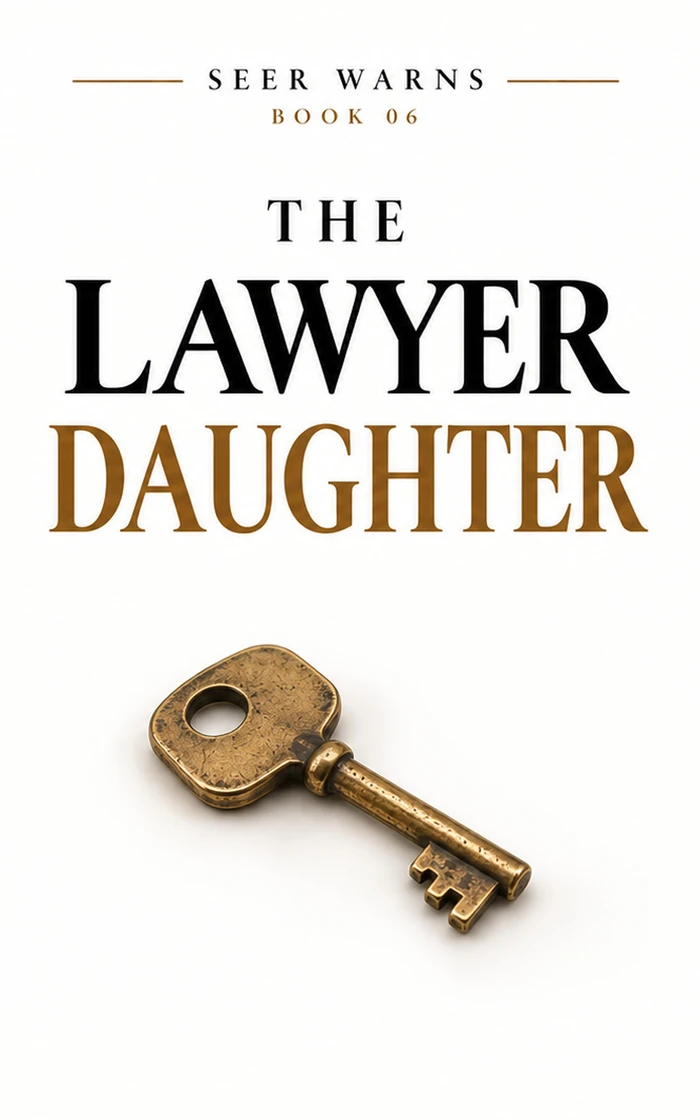
The cast.
Diana Torres, 43, is the one who opened the drawer. A corporate attorney with a perception filter that never shuts off, the catcher of small entries, the daughter who organized her solitude around her work. She holds evidence to a legal standard and does not believe in testimony from the future, until she has to.
Ernesto Torres is the father, six weeks in the ground, Torres Construction, who built the North End with a pickup and a circular saw and left everything organized except the locked bottom-right drawer. Rosa Torres is the mother, who wears the same dress to every funeral and has been waiting thirty-eight years for this conversation. Marco Torres is Diana’s brother, the one who does not want to know. Carmen Reyes is the woman in Bridgeport, forty years of $1,200 checks. Luz, 41, is the half-sister, Ernesto’s jawline and Ernesto’s hands, who grew up five hours away and got fifteen days a year of a man eight hundred other kids got a whole season of. Howard Baca is the accountant who said Ernesto was meticulous three times and meant it each time.
The Seer is the woman at the funeral reception, sixties, short silver hair, a black blazer over a gray blouse, meeting clothes not funeral clothes, her hands still beside the casserole dish the way exhibits are still once entered into the record.
The Seer scene.
The day they buried Ernesto, the house on Riverside Avenue full of two hundred mourners, Diana serving food in the kitchen. The woman is at the counter, hands still. The two hundred voices hold a half-beat, the glasses suspend mid-clink, a child’s laugh stretches a note. She speaks to the casserole dish, not to Diana, naming no date and no name but Diana’s:
“You’ll find the drawer. It’s locked. The key is under the notepad in the drawer you already opened this morning. The notepad with the grocery list. … Nobody in the world has read that list but you and the man who wrote it.
“Inside the drawer is the record of a debt your father paid every month for the entire length of your life. … It has a city behind it. The city has a woman in it. The woman has a daughter. Your father’s daughter. Not the one giving the eulogy.
“Your mother knows, Diana. She has known for as long as the debt has been paid. The face she will wear when you tell her is not the face of surprise. It is the face of a woman who has been waiting for this conversation for as many years as you have been alive. … The truth was in the drawer for the length of a marriage and it was harmless in the drawer. You’ll take it out. The record will change everything it touches.”
Then the one impossible specific: the five groceries on the notepad, milk, eggs, tortillas, green chile, tomatoes, the last list Ernesto ever wrote, which Diana read alone at his desk at 7 a.m. that morning, unwitnessed. The woman puts a single tamale on a plate, sets it on the counter, and walks out the unlocked front door, unseen by Rosa, by Marco, by anyone Diana could later ask. The grocery list is the gauge; everything else is shape, and the shape will either fit the drawer or it will not.
The warned choice.
Loss A: open the drawer and let the record out. Drive to Bridgeport, find Carmen and Luz, tell Rosa and Marco, let forty years of a hidden second family rewrite the monument at the funeral, the eulogy, the eight hundred coached kids, the man the North End is burying as a saint.
Loss B: honor the secret. Leave the drawer locked, keep paying or stop paying in silence, let Ernesto stay the man three hundred people stood for, and carry alone the knowledge that the family she is holding together was always five and presented as four.
Diana, who gathers evidence first and confronts witnesses second, finds the woman has inverted the order, the prediction first, the proof locked in a drawer for later. The grocery list passes the only test she trusts. She opens it. Loss B is a thing she would have to choose to do; the truth is a thing the drawer does to her once the key turns.
The fracture tell.
The monument, and the casserole. Every mourner’s story, Mrs. Gutierrez’s thirty-two years of green-chile casseroles made for a preference Ernesto mentioned once, is true; the drawer is also true. The book’s grammar is the widening gap between the two true records of one man, the builder and the payer, the coach and the absent father, the mija in the kitchen and the Love, Dad on a Hallmark card. Diana’s bare work-surface tables, her case-length relationships, her perception filter that never turns off, all the structure she built around the work, must be broken open before she can become the kind of person who can hold both records at once.
The outcome.
Pyrrhic survival. The drawer empties the monument exactly as the woman named it; the secret reorganizes the family. But the prophecy bends toward something Diana could not have predicted: a year later the drawer is empty and the table is full. Rosa, who knew all along, sets down the weight she carried for thirty-eight years; Luz is invited to Sunday enchiladas and told to bring the green salsa, the kind their father liked; Diana keeps the brass key in a ceramic dish on her counter, a retired function become an inheritance. The family she spent her life holding together as four becomes, painfully and truly, a family of five. One day she will tell Ernesto’s granddaughter Sofia the whole grandfather, the monument and the drawer both. The drawer was empty. The table was full.
How it touches the other books.
Ernesto Torres is the North End’s builder, the counterpart to Earl Caldwell’s firm two blocks behind Haskell. Maggie Caldwell (The Loyal Daughter) comes to the funeral and trades the same arithmetic about HomePlus undercutting the small builders; the county forensic accountant Maria Gutierrez and the late-arriving widower Earl Henderson with Carolyn’s apple cake thread through the wider Harmon record the series keeps.